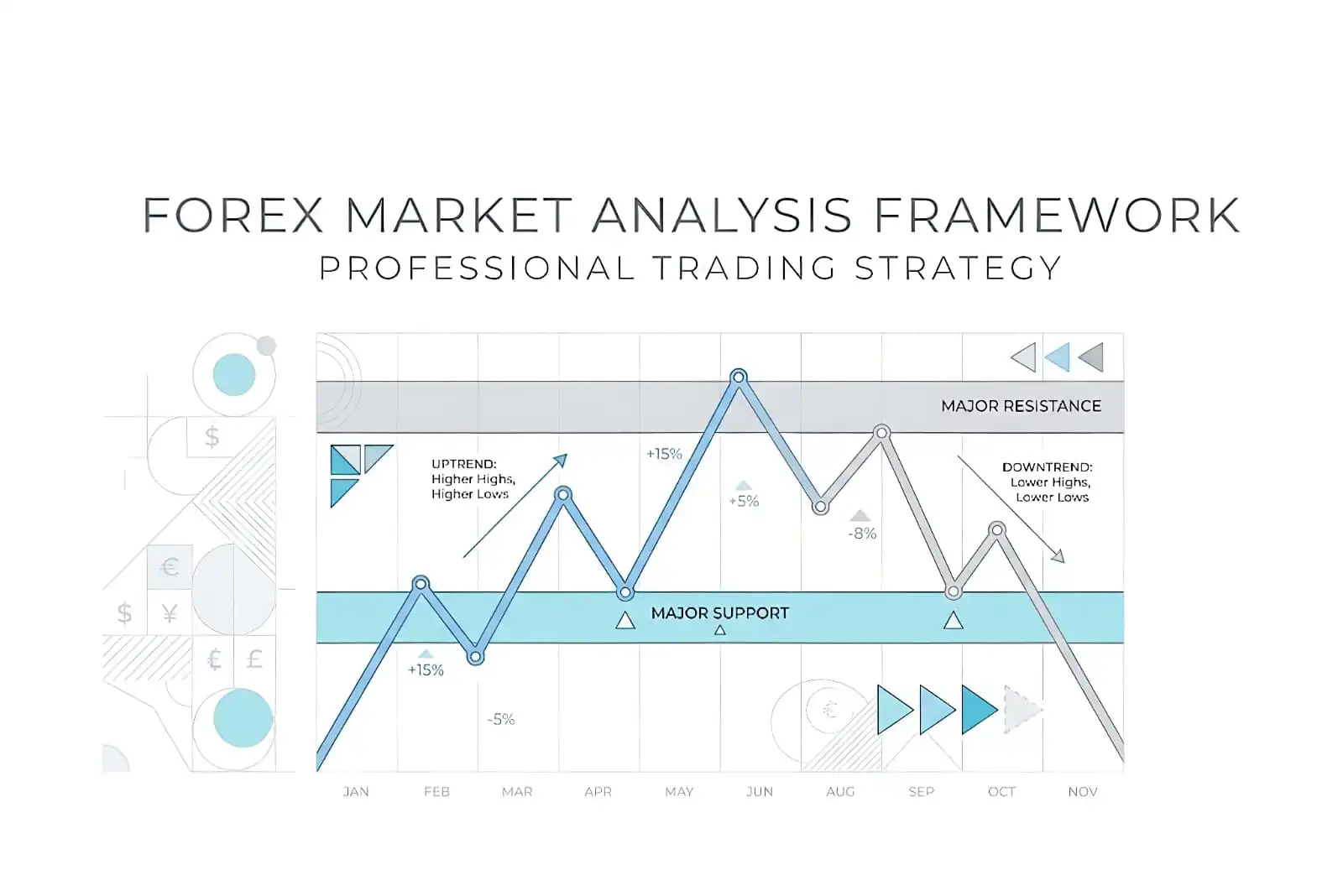
Forex market analysis is not about guessing or predicting where the market will go next. Instead, it is a structured process used by professional traders to filter out low-quality setups and focus only on high-probability trading opportunities.
Many beginner traders struggle because they rely on emotions, random indicators, or inconsistent strategies. A proper Forex market analysis framework helps eliminate these problems by providing a clear and repeatable process before entering any trade.
In this guide, you will learn a professional step-by-step approach to analyzing the Forex market effectively.
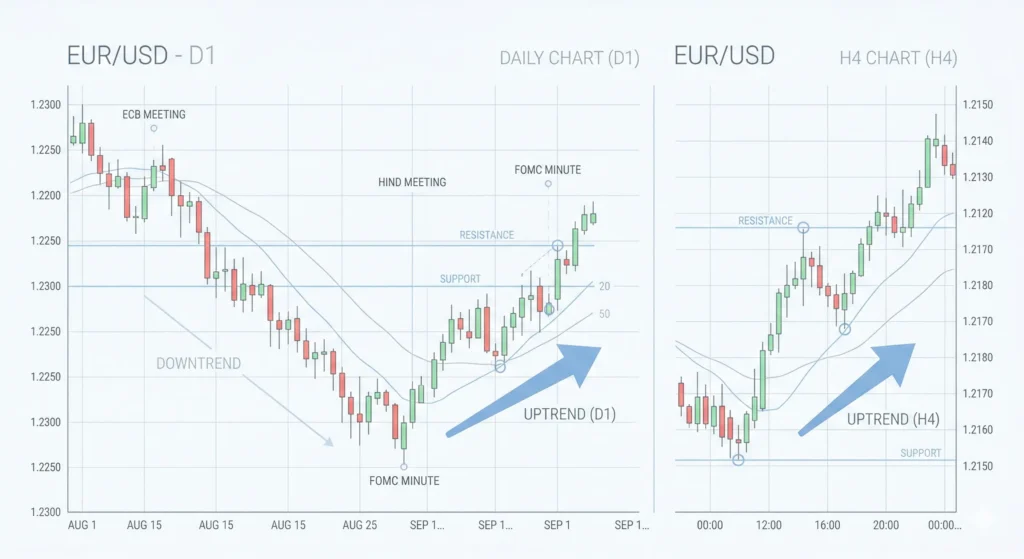
Step 1: Higher-Timeframe Context in Forex Market Analysis
The foundation of any strong Forex market analysis begins with higher timeframes such as the Daily and H4 charts. These timeframes provide a broader view of the market and help traders understand the overall direction.
When analyzing higher timeframes, focus on:
- Overall market trend (uptrend, downtrend, or sideways)
- Key institutional zones
- Long-term market bias
Without this context, traders often get lost in lower timeframe noise, leading to overtrading and confusion. A clear higher-timeframe view keeps your analysis aligned with the bigger picture.
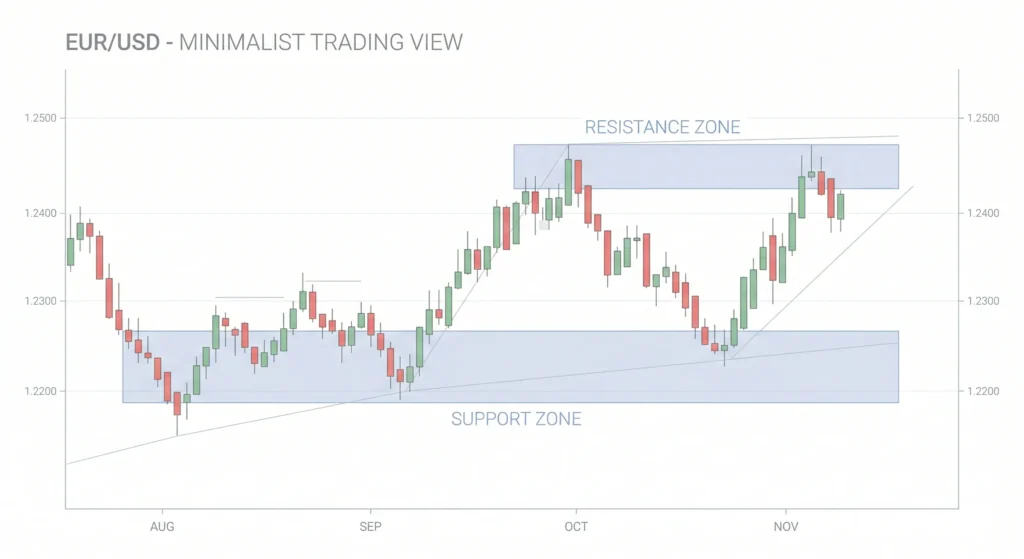
Step 2: Identify High-Impact Price Zones
A key part of Forex market analysis is identifying important price zones instead of drawing random lines. Price tends to react at areas where strong buying or selling occurred in the past.
Focus on the following zones:
- Strong support and resistance areas
- Previous swing highs and lows
- Zones with sharp historical reactions
These areas often represent institutional activity. Understanding them allows traders to anticipate where price may react again.
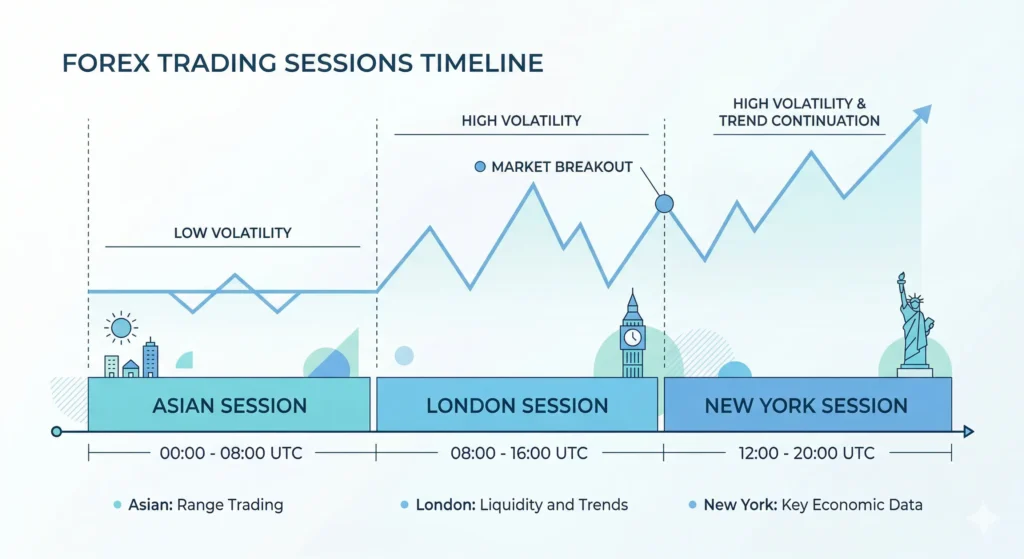
Step 3: Session-Based Forex Market Behavior
Another important aspect of Forex market analysis is understanding how the market behaves during different trading sessions.
- Asian Session: Typically slow, with consolidation and range movement
- London Session: High volatility and strong directional moves
- New York Session: Either continues the trend or creates reversals
Professional traders align their trades with these sessions. For example, entering during low volatility periods often leads to weak setups, while high-volume sessions provide better opportunities.
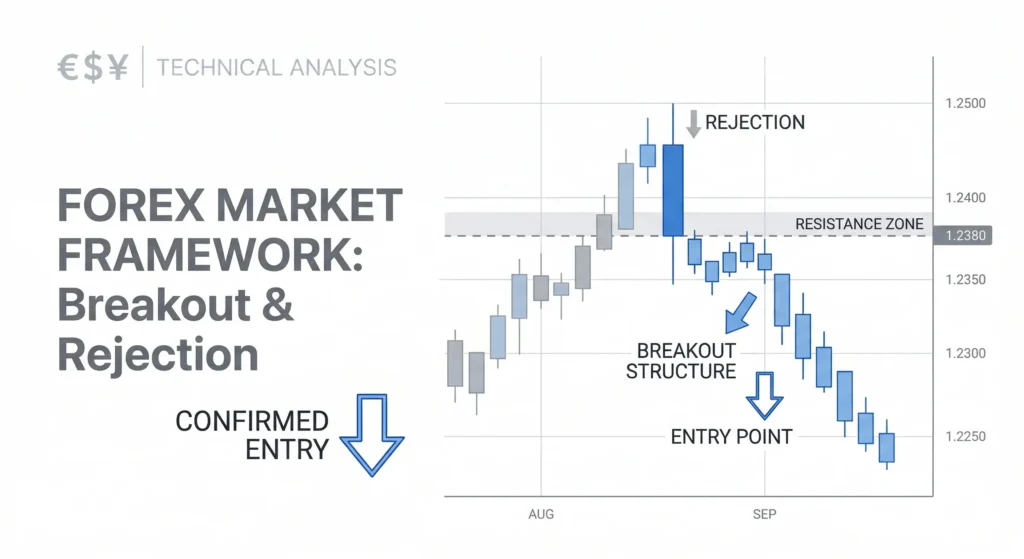
Step 4: Entry Confirmation Techniques
In professional Forex market analysis, traders do not enter trades blindly at key levels. Instead, they wait for confirmation that the market is reacting as expected.
Common confirmation signals include:
- Strong rejection candles
- Momentum shifts
- Break of market structure
This step helps reduce false signals and ensures that trades are based on real market behavior rather than assumptions.
Step 5: Risk and Execution Planning
Risk management is a critical part of Forex market analysis. Before placing a trade, professional traders clearly define their plan.
This includes:
- Exact stop-loss level
- Defined take-profit targets
- Fixed risk percentage per trade
Execution should always be mechanical and rule-based. Emotional decisions often lead to inconsistent results and unnecessary losses.
Why Consistency Matters More Than Strategy
Many traders spend years searching for the “perfect strategy,” but in reality, success in Forex market analysis comes from consistency, not complexity.
Professional traders focus on:
- Following one system consistently
- Maintaining discipline
- Controlling emotions
Even a simple strategy can be profitable when applied with discipline and patience over time.
Conclusion
Forex market analysis is a structured process that helps traders make better decisions by focusing on high-probability setups. By combining higher-timeframe context, key price zones, session behavior, confirmation, and proper risk management, traders can significantly improve their performance.