Introduction
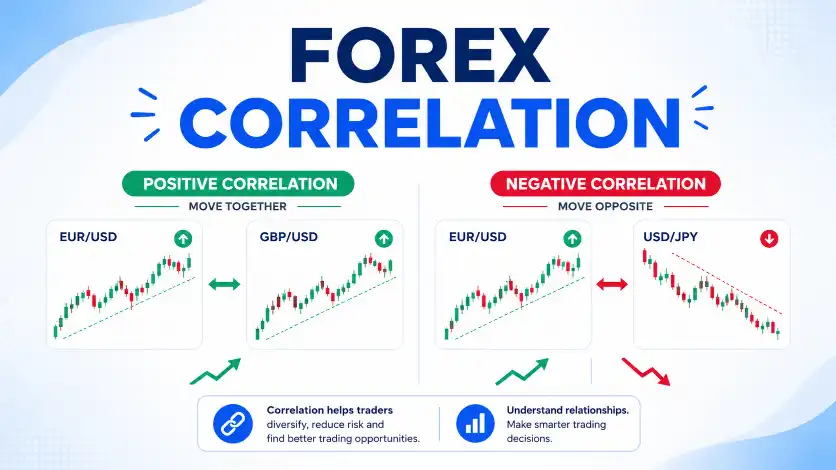
Forex correlation is an important concept that helps traders understand how different currency pairs move in relation to each other.
In this guide, you will learn what Forex correlation is, how it works, and why it matters in trading.
What is Forex Correlation
Forex correlation measures the relationship between two currency pairs.
In simple words
It shows whether two currency pairs move in the same direction or opposite direction
Types of Forex Correlation
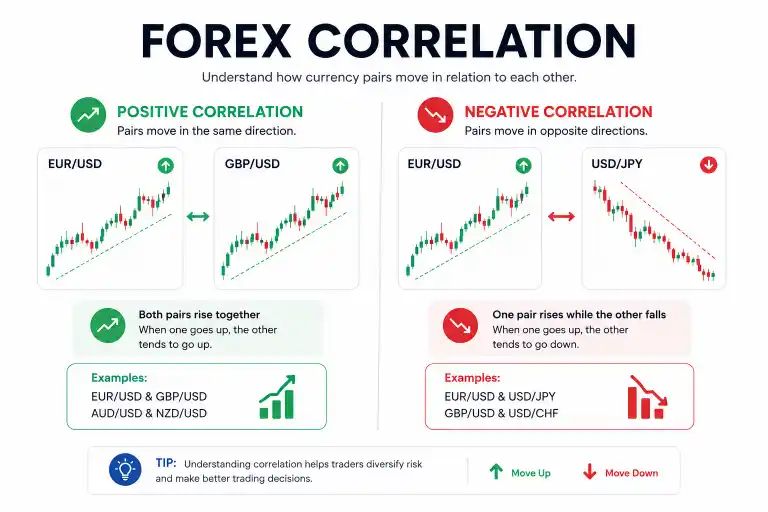
Positive Correlation
Two currency pairs move in the same direction.
Example:
- EUR/USD and GBP/USD often move similarly
Negative Correlation
Two currency pairs move in opposite directions.
Example:
- EUR/USD and USD/CHF often move opposite to each other
Correlation Scale
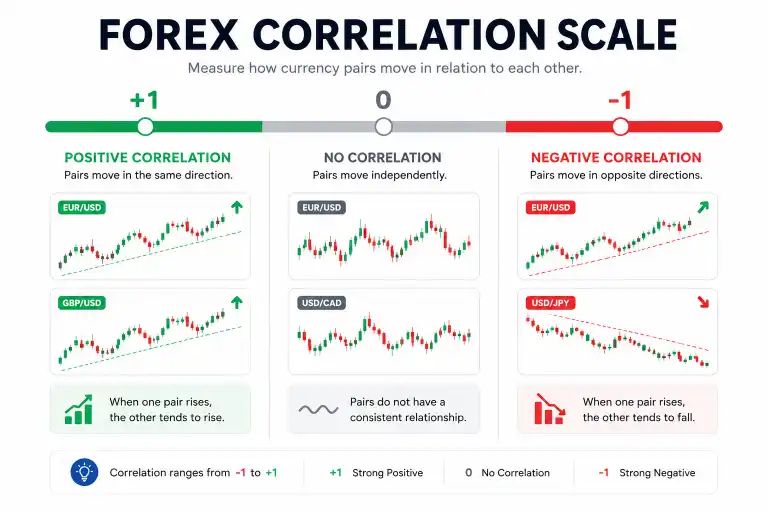
Correlation is measured between:
- +1
- 0
- -1
+1 Correlation
Pairs move in the same direction strongly.
0 Correlation
No clear relationship between pairs.
-1 Correlation
Pairs move in completely opposite directions.
Why Forex Correlation is Important
Better Risk Management
Helps traders avoid taking multiple similar trades.
Portfolio Diversification
Traders can reduce risk by avoiding highly correlated pairs.
Trade Confirmation
Correlation can help confirm market direction.
Examples of Forex Correlation
Positive Correlation Pairs
- EUR/USD and GBP/USD
- AUD/USD and NZD/USD
Negative Correlation Pairs
- EUR/USD and USD/CHF
- GBP/USD and USD/JPY sometimes show opposite movement
How Traders Use Correlation
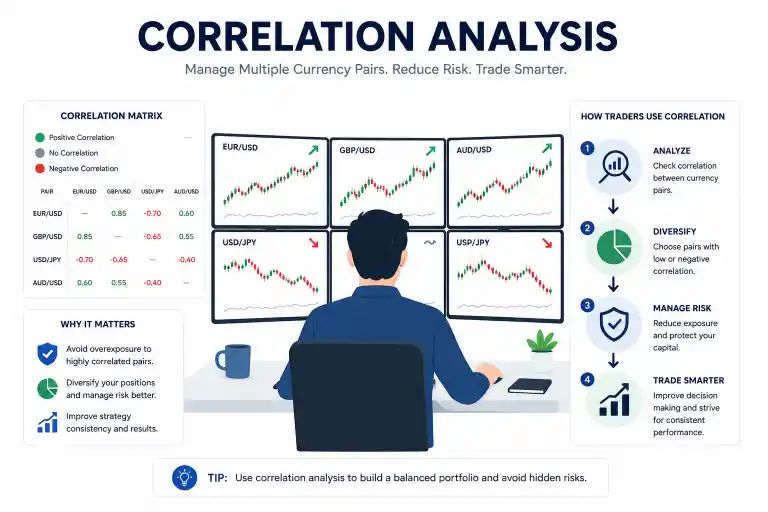
- Avoid overexposure in similar pairs
- Confirm trade setups
- Improve overall risk control
Common Mistakes
- Trading highly correlated pairs together without risk control
- Ignoring correlation during major news events
- Assuming correlation always stays the same
Best Practice for Beginners
- Monitor pair relationships regularly
- Use correlation for risk management
- Avoid opening multiple similar trades
Pro Tip
Correlation changes over time based on market conditions and economic events.
Conclusion
Forex correlation helps traders understand relationships between currency pairs and manage trading risk more effectively.
If used properly, it can improve trade planning and portfolio management.