Introduction
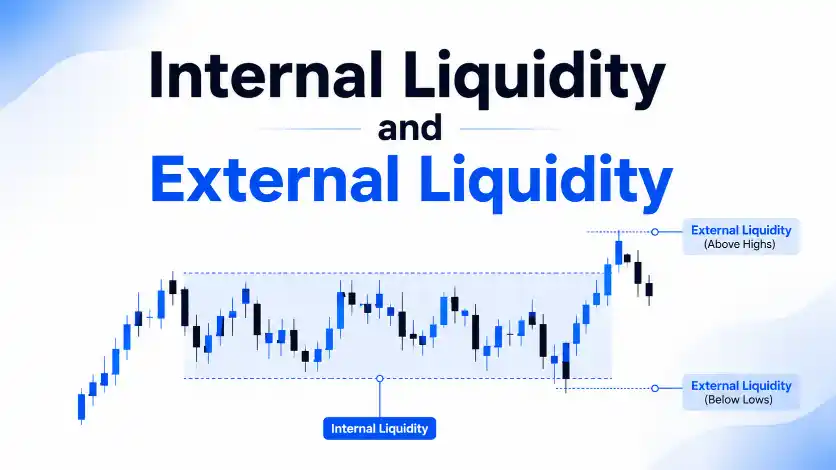
Internal Liquidity and External Liquidity are important Smart Money concepts that help traders understand where price may move next.
Institutional traders often use these liquidity zones to execute large positions and drive market movement.
In this guide, you will learn what Internal Liquidity and External Liquidity are, how they work, and why they are important in Forex trading.
What is Internal Liquidity and External Liquidity
Liquidity refers to areas where orders are concentrated in the market.
In simple words
Internal Liquidity exists inside the current trading range, while External Liquidity exists outside major highs and lows.
What is Internal Liquidity
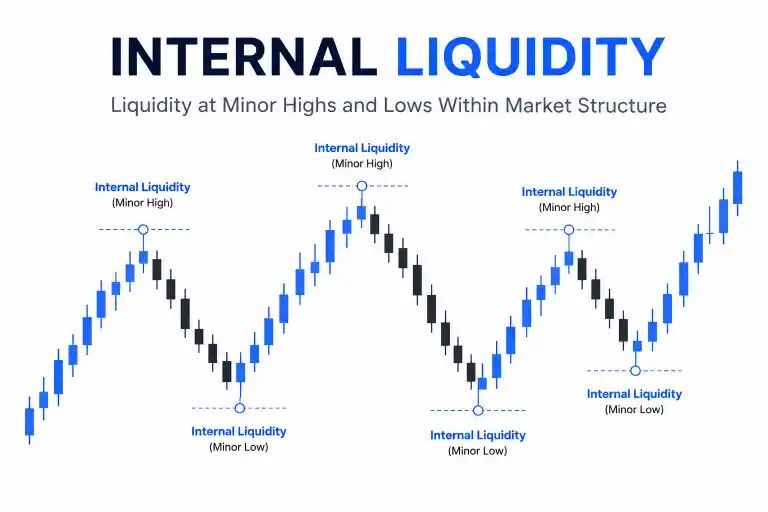
Internal Liquidity is found within the current market structure.
Common examples include:
- Minor highs
- Minor lows
- Pullback levels
- Internal market swings
These areas contain smaller pools of liquidity that may be targeted before larger moves.
What is External Liquidity
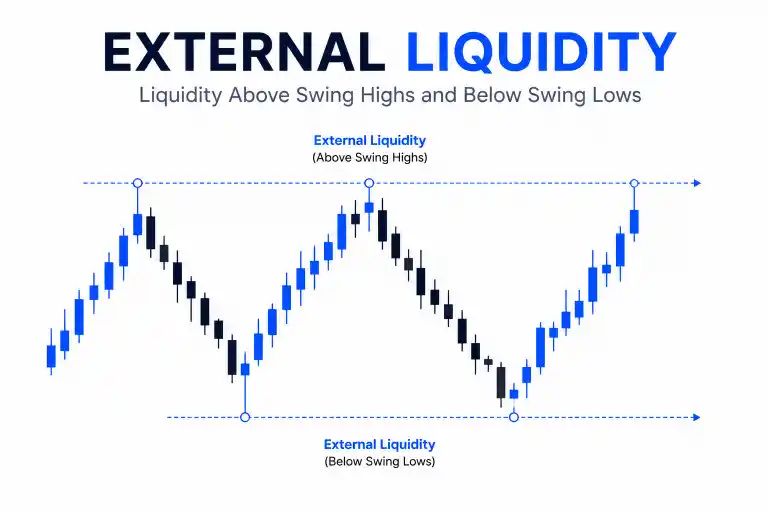
External Liquidity exists outside significant market structure levels.
Common examples include:
- Swing highs
- Swing lows
- Equal highs
- Equal lows
- Major support levels
- Major resistance levels
These zones often contain larger pools of Stop Loss and pending orders.
Why Liquidity is Important
Helps Understand Market Direction
Price often moves from one liquidity area to another.
Reveals Institutional Interest
Institutions frequently target liquidity before making major moves.
Improves Trade Planning
Liquidity analysis helps traders identify potential market objectives.
How Internal and External Liquidity Work
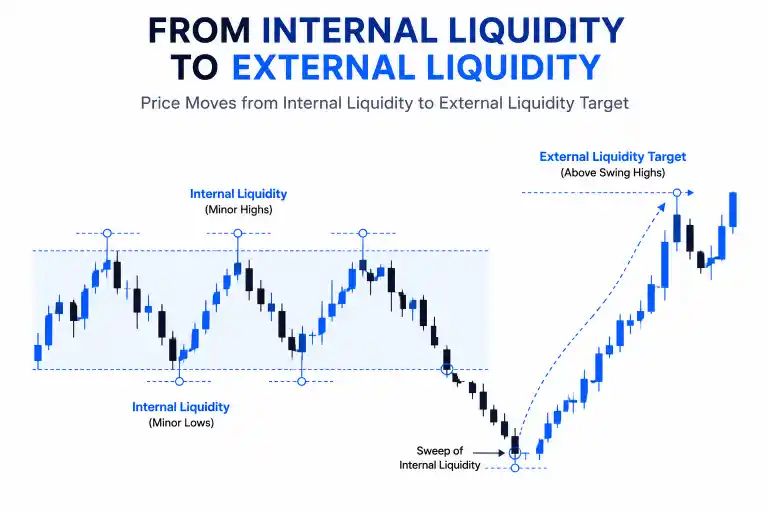
- Market forms internal liquidity
- Price targets internal liquidity first
- Market continues toward external liquidity
- Liquidity is collected
- New structure develops
This process is common in Smart Money trading models.
Internal Liquidity vs External Liquidity
Internal Liquidity
- Located inside market structure
- Smaller liquidity pools
- Often targeted first
External Liquidity
- Located outside major highs and lows
- Larger liquidity pools
- Often acts as major market target
Internal and External Liquidity with Smart Money Concept
These concepts work effectively with:
- Liquidity Sweep
- Inducement
- Order Blocks
- Fair Value Gap
- Market Structure Shift
Common Mistakes
- Ignoring external liquidity targets
- Trading against liquidity direction
- Focusing only on internal structure
- Entering without confirmation
Best Practice for Beginners
- Mark major highs and lows
- Identify internal swing points
- Understand liquidity hierarchy
- Use proper risk management
Pro Tip
In many cases, price removes internal liquidity before moving toward external liquidity targets.
Conclusion
Internal Liquidity and External Liquidity help traders understand how price moves between liquidity zones.
When combined with Smart Money concepts, they can improve market analysis, trade planning, and risk management.