Introduction
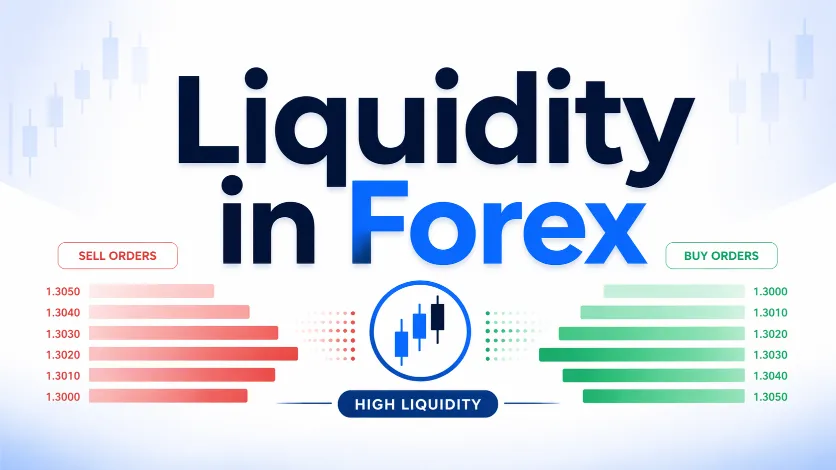
Liquidity is one of the most important factors in Forex trading. It affects how easily you can enter and exit trades without large price changes.
In this guide, you will learn what liquidity is, how it works, and why it matters in trading.
What is Liquidity in Forex

Liquidity refers to how easily a currency pair can be bought or sold without affecting its price.
In simple words
High liquidity means easy buying and selling with stable prices
Example of Liquidity
- EUR/USD has high liquidity because many traders trade it
- Exotic pairs have low liquidity because fewer traders are involved
Why Liquidity is Important
Smooth Trade Execution
High liquidity allows trades to be executed quickly.
Lower Spread
Highly liquid markets usually have lower spreads.
Less Slippage
Price changes are smaller in liquid markets.
High Liquidity vs Low Liquidity
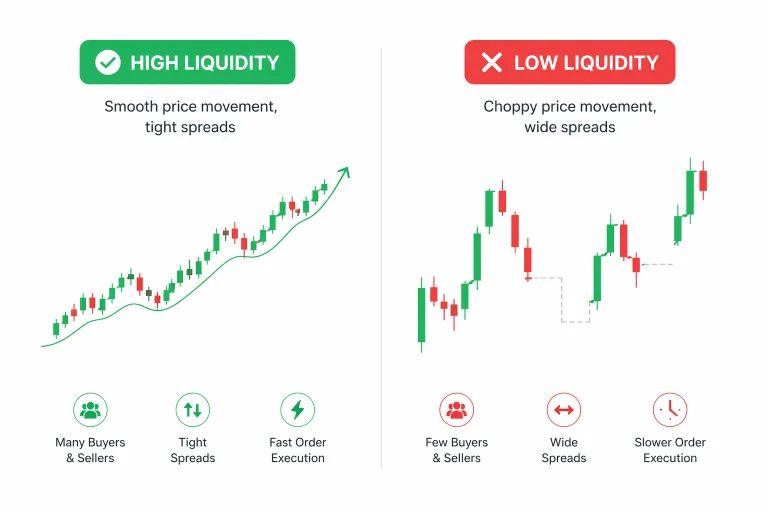
High Liquidity
- Many buyers and sellers
- Tight spreads
- Stable price movement
Low Liquidity
- Fewer participants
- Wider spreads
- Unstable price movement
When Liquidity is High

- During London session
- During New York session
- During session overlap
When Liquidity is Low
- During Asian session
- During market open or close
- During holidays
How Liquidity Affects Trading
- Better entry and exit prices
- Lower trading cost
- Reduced risk of slippage
Common Mistakes
- Trading low liquidity pairs
- Ignoring session timing
- Trading during inactive hours
Best Practice for Beginners
- Trade major currency pairs
- Focus on high liquidity sessions
- Avoid low activity times
Pro Tip
Trade when the market is active to get better execution and lower cost.
Conclusion
Liquidity plays a key role in Forex trading.
If you trade in high liquidity conditions, your trades become smoother and more efficient.