
Introduction
Equal Highs and Equal Lows are important Smart Money concepts used to identify liquidity zones in the Forex market.
These levels often attract institutional traders because they contain large amounts of Stop Loss orders and pending orders.
In this guide, you will learn what Equal Highs and Equal Lows are, how they work, and why they are important in Forex trading.
What are Equal Highs and Equal Lows
Equal Highs occur when price creates two or more highs at nearly the same level.
Equal Lows occur when price creates two or more lows at nearly the same level.
In simple words
They are areas where many traders place Stop Loss orders, making them attractive liquidity targets.
What are Equal Highs
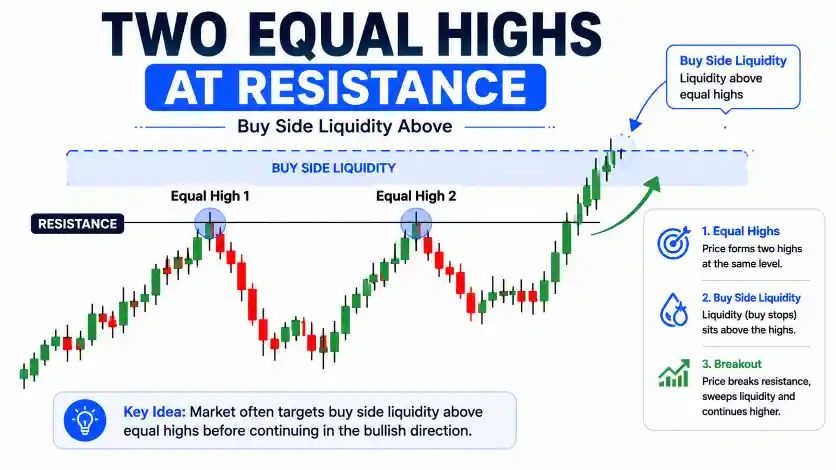
Equal Highs form when the market repeatedly fails to break above a resistance area.
Characteristics include:
- Similar swing highs
- Strong resistance zone
- Potential Buy Side Liquidity
Many traders place sell orders below these highs and Stop Loss orders above them.
What are Equal Lows
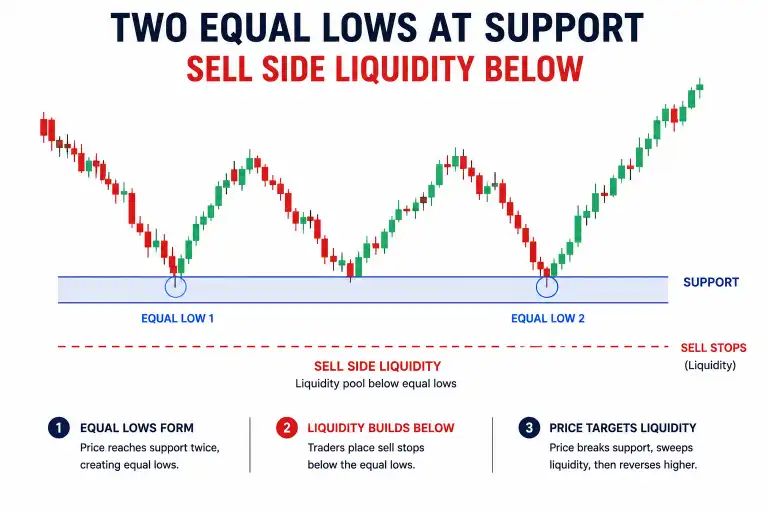
Equal Lows form when the market repeatedly fails to break below a support area.
Characteristics include:
- Similar swing lows
- Strong support zone
- Potential Sell Side Liquidity
Many traders place buy orders above these lows and Stop Loss orders below them.
Why Equal Highs and Equal Lows are Important
Liquidity Identification
They help traders locate areas where liquidity may be resting.
Institutional Interest
Large institutions often target these levels before major market moves.
Better Trade Planning
These zones help traders prepare for possible liquidity grabs.
How Equal Highs and Equal Lows Work
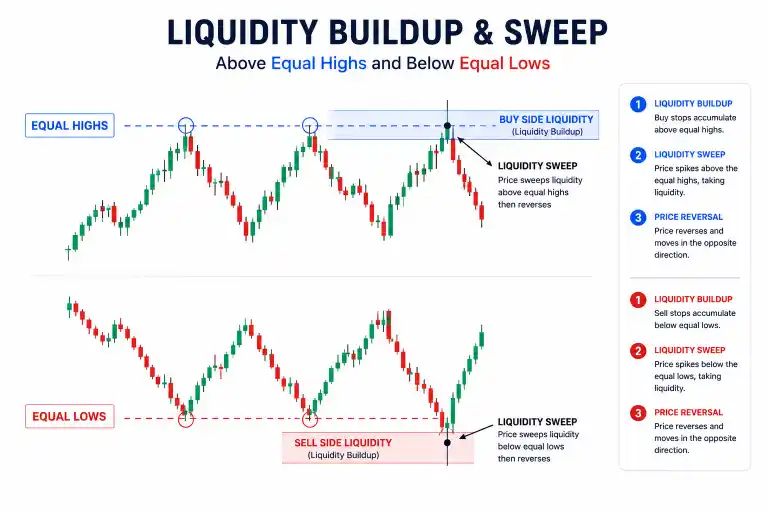
- Market forms equal highs or equal lows
- Traders place Stop Loss orders around these levels
- Liquidity builds over time
- Institutions target liquidity
- Price often reacts strongly afterward
Equal Highs vs Equal Lows
Equal Highs
Located near resistance.
Usually contain Buy Side Liquidity.
Equal Lows
Located near support.
Usually contain Sell Side Liquidity.
Equal Highs and Smart Money Concept
These levels work effectively with:
- Liquidity Grab
- Order Blocks
- Fair Value Gap
- Market Structure Shift
- Inducement
Common Mistakes
- Assuming equal highs always hold
- Assuming equal lows always hold
- Entering before liquidity sweep
- Ignoring higher timeframe analysis
Best Practice for Beginners
- Mark equal highs and equal lows clearly
- Wait for confirmation after liquidity sweep
- Combine with market structure analysis
- Use proper risk management
Pro Tip
The longer equal highs or equal lows remain untouched, the more liquidity may build around them.
Conclusion
Equal Highs and Equal Lows help traders identify potential liquidity zones where institutions may become active.
When combined with Smart Money concepts, they can improve market analysis and trade execution.