Introduction
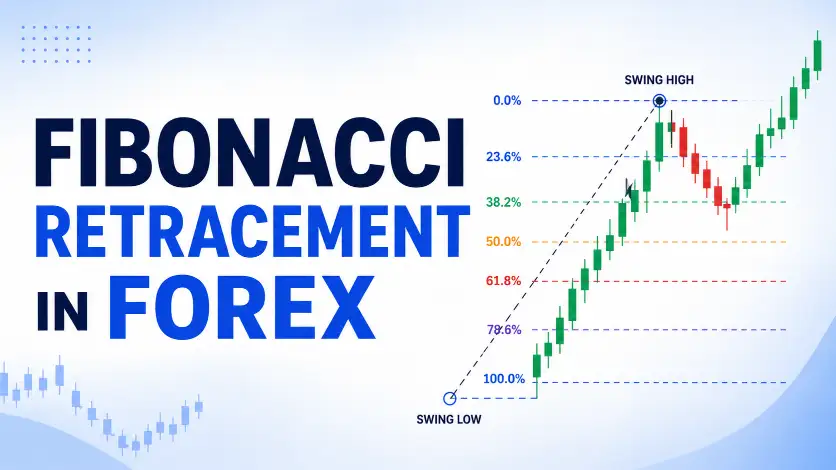
Fibonacci Retracement is a popular technical analysis tool used by Forex traders to identify possible support and resistance levels.
In this guide, you will learn what Fibonacci Retracement is, how it works, and how traders use it in Forex trading.
What is Fibonacci Retracement in Forex
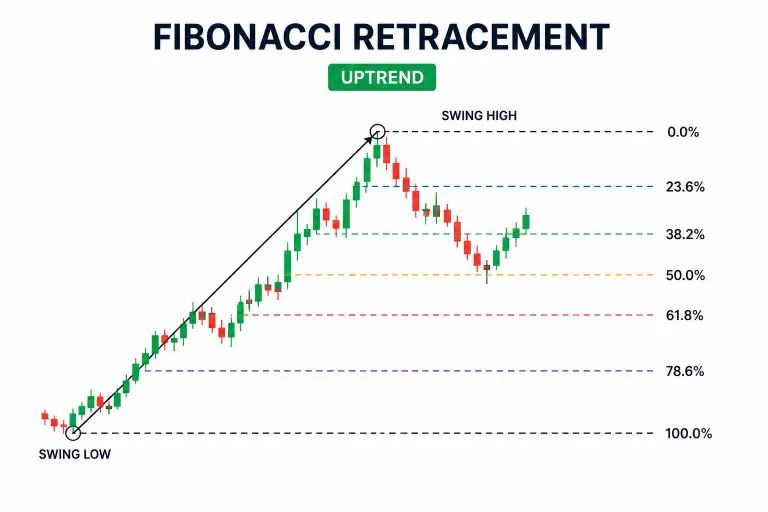
Fibonacci Retracement is a tool that uses percentage levels to identify possible price retracement areas during a trend.
Common Fibonacci levels include:
- 23.6%
- 38.2%
- 50%
- 61.8%
- 78.6%
In simple words
It helps traders find possible reversal or continuation zones
How Fibonacci Retracement Works
Traders draw Fibonacci levels from a swing low to a swing high in an uptrend.
In a downtrend, levels are drawn from swing high to swing low.
Price may react near Fibonacci levels before continuing the trend.
Why Fibonacci Retracement is Important
Identifies Support and Resistance
Fibonacci levels often act as key market zones.
Helps Find Entry Points
Traders use retracement levels to enter trades with trend direction.
Improves Risk Management
Useful for placing Stop Loss and Take Profit levels.
Common Fibonacci Trading Strategies
Trend Continuation Strategy
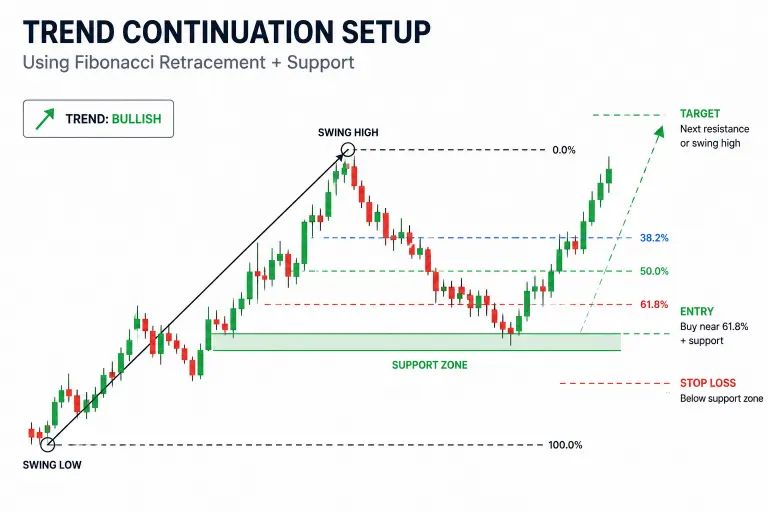
Traders wait for price retracement to Fibonacci levels before entering in trend direction.
Confluence Strategy
Fibonacci levels combined with support and resistance create stronger trade setups.
Reversal Strategy
Price rejection at major Fibonacci levels may indicate reversal.
Most Important Fibonacci Levels
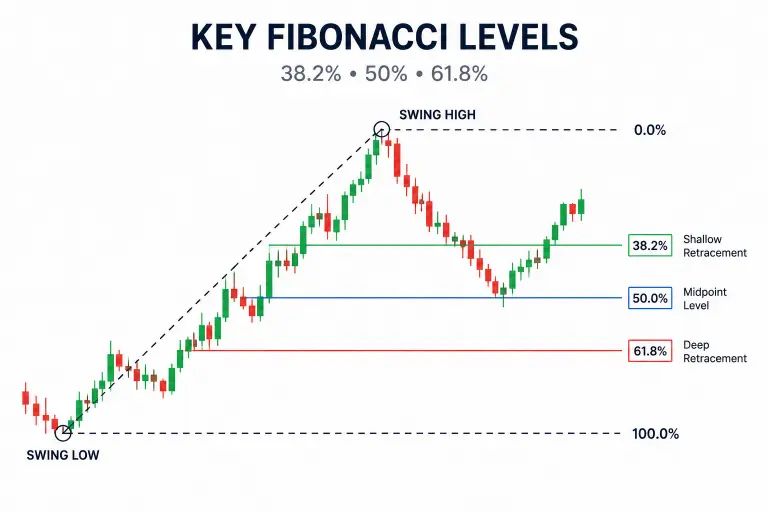
38.2%
Shallow retracement in strong trend.
50%
Common retracement level watched by traders.
61.8%
Known as the golden ratio and considered a strong level.
Common Mistakes
- Drawing Fibonacci incorrectly
- Using Fibonacci without trend analysis
- Trading every Fibonacci level blindly
Best Practice for Beginners
- Use Fibonacci in trending markets
- Combine with price action
- Wait for confirmation before entry
Pro Tip
Fibonacci works best when combined with support and resistance levels.
Conclusion
Fibonacci Retracement helps traders identify important market levels and possible trading opportunities.
If used correctly, it can improve market analysis and trade planning.