Many traders focus only on profit, but professional traders focus on risk management.
Risk management is the key to surviving in Forex trading for the long term.
In this guide, you will learn what risk management is and how to apply it correctly.
What is Risk Management in Forex

Risk management is the process of controlling how much money you can lose in a trade.
In simple words:
It protects your trading account from big losses.
Why Risk Management is Important
1. Protects Your Capital
Without risk management, you can lose your entire account.
2. Long-Term Survival
Trading is not about one trade — it’s about consistency.
3. Reduces Emotional Trading
With proper risk control, you trade with confidence.
The 1% Rule
One of the most popular rules:
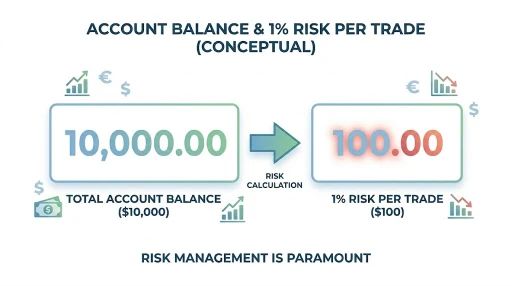
Never risk more than 1% of your account on a single trade
Example:
- Account = $1000
- Risk per trade = $10
Risk and Reward Ratio
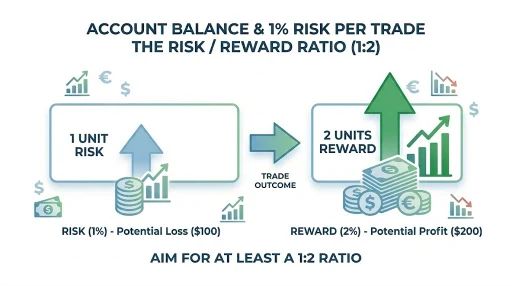
Risk/Reward Ratio means:
How much you risk vs how much you expect to gain
Example:
- Risk = 20 pips
- Reward = 40 pips
Ratio = 1:2
Tools for Risk Management
1. Stop Loss
Limits your loss automatically
2. Lot Size
Controls trade size
3. Proper Leverage
Avoid high leverage
Common Mistakes Beginners Make
Risking too much money
Trading without Stop Loss
Using high leverage
Overtrading
Best Risk Management Strategy
Use 1% risk rule
Always use Stop Loss
Maintain 1:2 risk/reward ratio
Stay disciplined
Pro Tip
Focus on protecting your money, not just making profit
Small losses are normal — big losses are dangerous
What You Should Learn Next
What is Trading Psychology in Forex
Also like
Start here: What is Forex Trading
Learn Stop Loss: Stop Loss and Take Profit in Forex
Understand lot size: What is Lot Size in Forex
Conclusion
Risk management is the foundation of successful trading.
If you pcontrolrotect your capital, you can stay in the market and grow over time.