Introduction
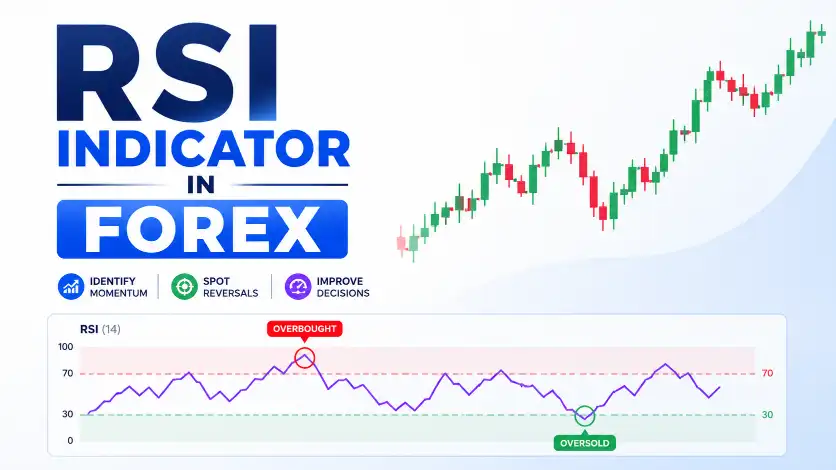
RSI is one of the most popular indicators used in Forex trading. It helps traders identify overbought and oversold market conditions.
In this guide, you will learn what RSI is, how it works, and how traders use it in Forex trading.
What is RSI Indicator in Forex
RSI stands for Relative Strength Index.
It is a momentum indicator that measures the speed and strength of price movement.
In simple words
RSI helps traders understand whether the market may reverse or continue
How RSI Works
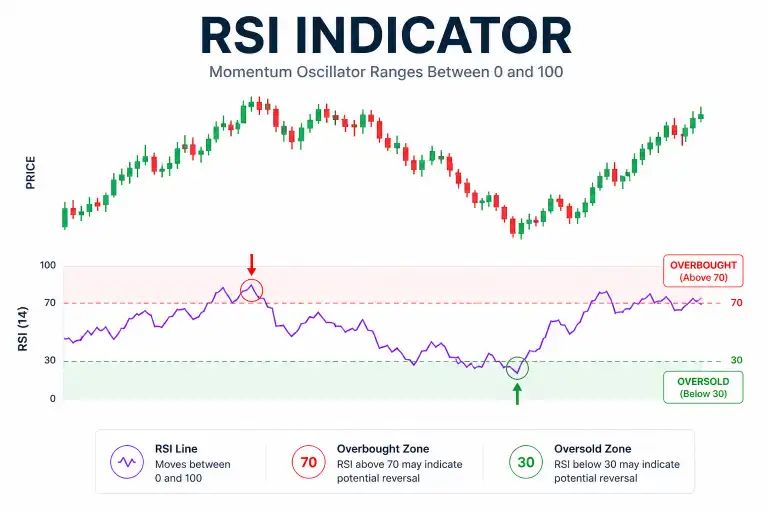
RSI moves between 0 and 100.
- RSI above 70 may indicate overbought market
- RSI below 30 may indicate oversold market
Traders use these levels to identify possible reversal areas.
Why RSI is Important
Identifies Overbought and Oversold Conditions
RSI helps traders spot possible market reversals.
Confirms Trend Strength
Strong RSI movement can confirm market momentum.
Helps with Entry and Exit
Many traders use RSI for trade timing.
Common RSI Trading Strategies
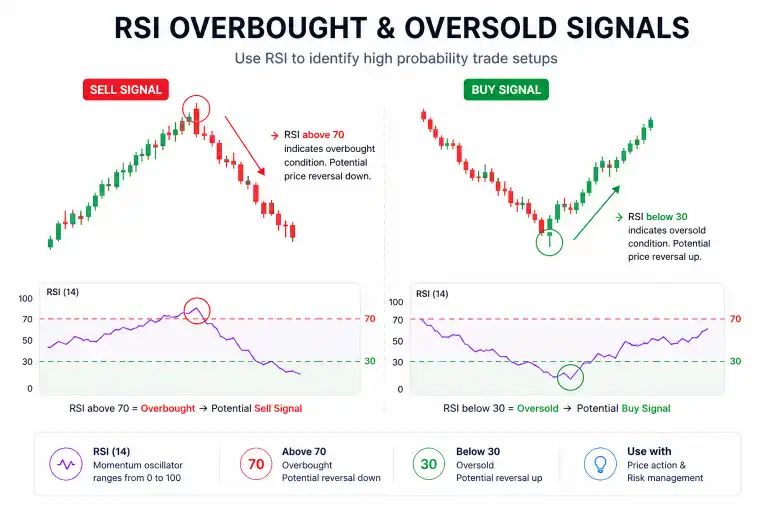
Overbought and Oversold Strategy
- RSI above 70 may signal selling opportunity
- RSI below 30 may signal buying opportunity
RSI Divergence
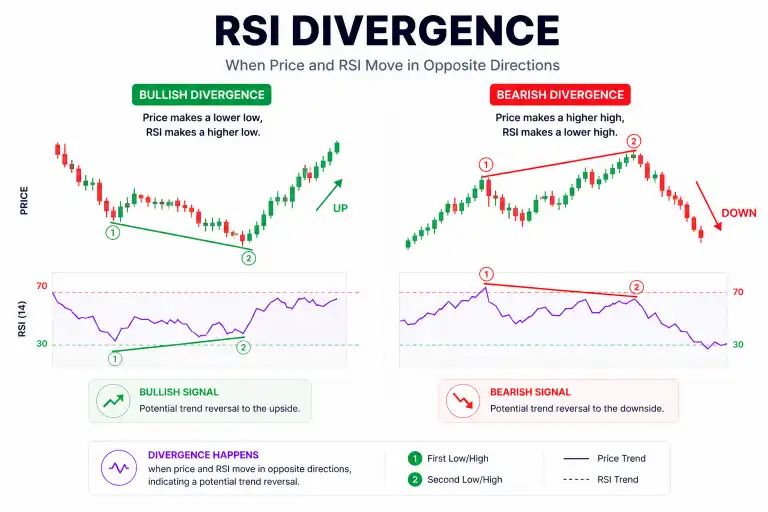
Divergence happens when price and RSI move differently.
This may indicate possible trend reversal.
RSI Trend Confirmation
RSI staying above 50 may support bullish trend.
RSI staying below 50 may support bearish trend.
Common Mistakes
- Using RSI alone without confirmation
- Selling immediately above 70
- Buying immediately below 30
Best Practice for Beginners
- Combine RSI with support and resistance
- Use RSI with trend analysis
- Wait for confirmation before entering trades
Pro Tip
RSI works better when combined with price action and market structure.
Conclusion
RSI is a simple and effective indicator for understanding market momentum.
If used correctly, it can help improve trading decisions and timing.