Introduction
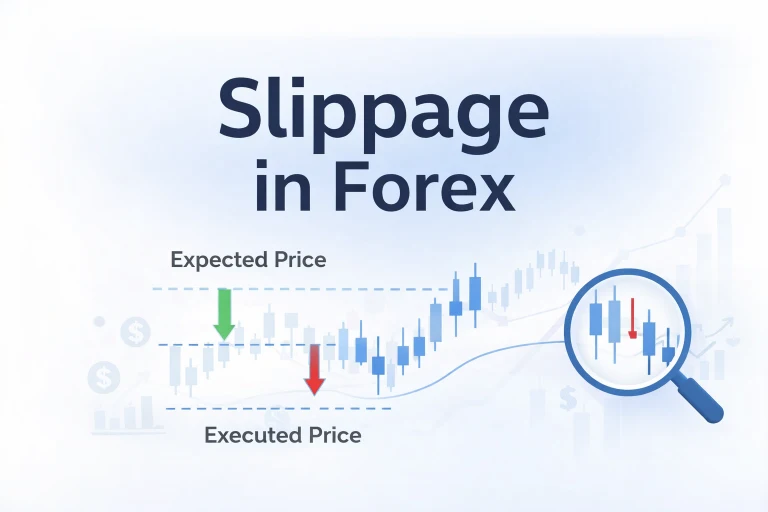
Slippage is a common concept in Forex trading that affects the price at which your trade is executed. It usually happens during fast market movements or high volatility.
In this guide, you will learn what slippage is, why it happens, and how to manage it.
What is Slippage in Forex
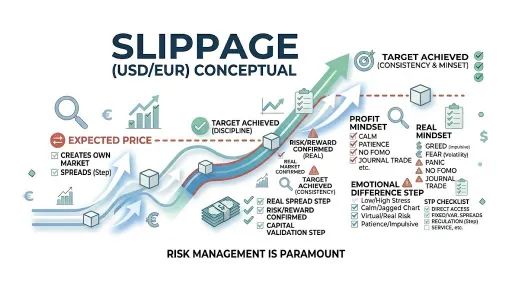
Slippage is the difference between the expected price of a trade and the actual price at which the trade is executed.
In simple words
You get a slightly different price than you expected
Example of Slippage
Let’s say:
- You place a buy order at 1.1000
- Your trade is executed at 1.1003
This means you experienced 3 pips slippage
Types of Slippage
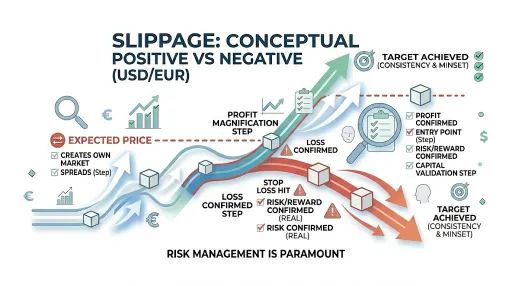
Positive Slippage
You get a better price than expected
Negative Slippage
You get a worse price than expected
Why Slippage Happens
High Volatility
During news events like NFP, prices move very fast.
Low Liquidity
Fewer buyers and sellers in the market cause price gaps.
Fast Market Execution
Orders are filled at the next available price.
When Slippage is Common
- During major news events
- At market open or close
- In low liquidity sessions
Impact of Slippage
- Affects your entry and exit price
- Can increase loss or reduce profit
- More noticeable in high volatility
How to Reduce Slippage
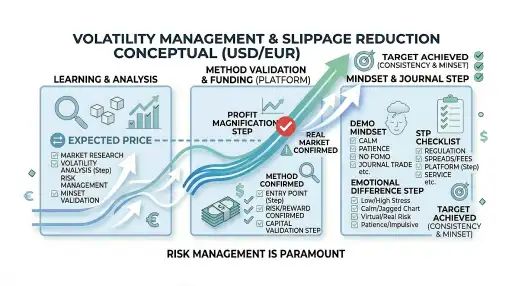
- Avoid trading during major news
- Use limit orders instead of market orders
- Trade during high liquidity sessions
- Choose a reliable broker
Common Mistakes
- Ignoring slippage in trading plan
- Trading during high volatility without preparation
- Using high leverage during news
Best Practice for Beginners
- Trade in stable market conditions
- Use proper risk management
- Understand market timing
Pro Tip
Slippage cannot be completely avoided, but it can be managed with proper planning.
Conclusion
Slippage is a normal part of Forex trading.
If you understand it and manage it properly, it will not significantly affect your trading performance.