Introduction
Volatility is a key concept in Forex trading. It shows how fast and how much the price of a currency pair moves.
Understanding volatility helps traders choose the right time to trade and manage risk effectively.
What is Volatility in Forex
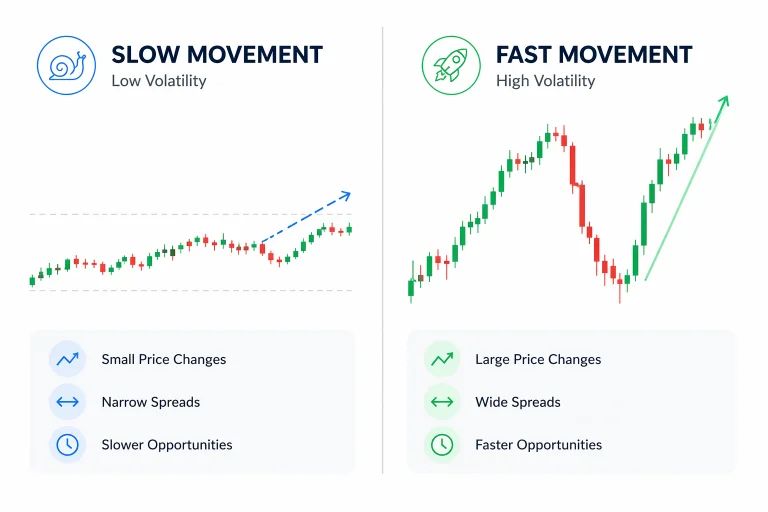
Volatility refers to the speed and size of price movements in the market.
In simple words
High volatility means big and fast price movement
Low volatility means small and slow price movement
Example of Volatility
- EUR/USD moves 10 pips in one hour
This is low volatility - EUR/USD moves 100 pips in one hour
This is high volatility
Types of Volatility
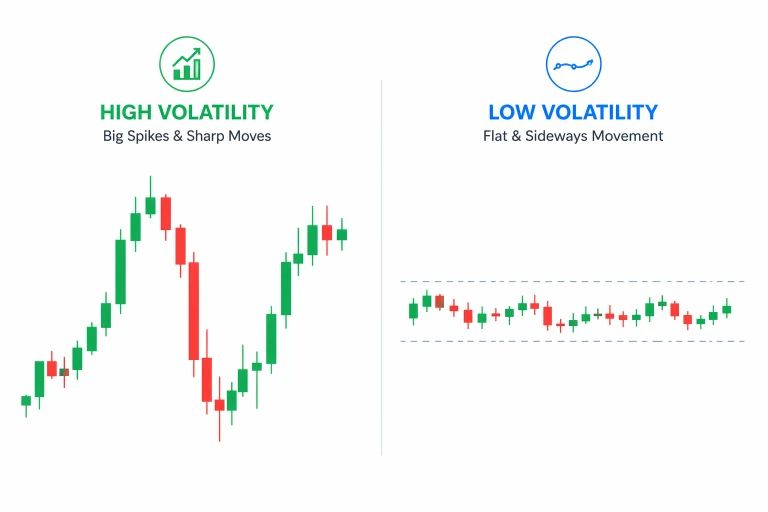
High Volatility
- Large price movements
- Fast market action
- More trading opportunities
Low Volatility
- Small price movements
- Slow market
- Fewer opportunities
What Causes Volatility
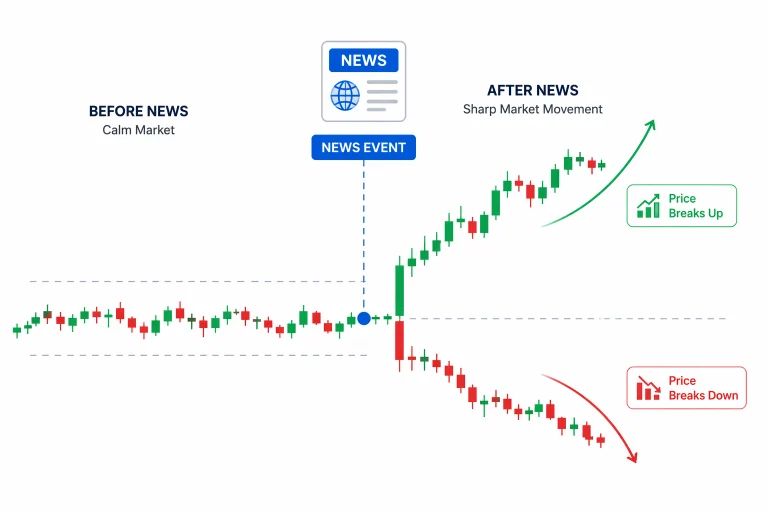
Economic News
Major news events create strong price movement.
Market Sessions
Volatility increases during London and New York sessions.
Liquidity Changes
Low liquidity can increase sudden price movement.
Why Volatility is Important
Trading Opportunities
Higher volatility creates more chances to trade.
Risk Factor
High volatility increases both profit and loss.
Strategy Selection
Different strategies work in different volatility conditions.
Volatility and Risk
- High volatility means higher risk
- Low volatility means lower risk but fewer opportunities
Common Mistakes
- Trading high volatility without risk control
- Avoiding volatility completely
- Not adjusting strategy based on market condition
Best Practice for Beginners
- Start with moderate volatility
- Avoid trading during extreme news events
- Use proper risk management
Pro Tip
Do not trade every movement. Choose the right volatility level that suits your strategy.
Conclusion
Volatility plays a major role in Forex trading.
If you understand how it works, you can choose better trading opportunities and manage risk more effectively.